









 ENGLISH
 FRANÇAIS
 ESPAÑOL
Production Lead
Guide the experience. Support the team. Run the program with excellence.
In this section:
Welcome
You are stepping into one of the most important roles in the Global Leadership Summit. This is more than running an event—it’s about creating a space where leaders can encounter inspiration, transformation, and fresh vision.
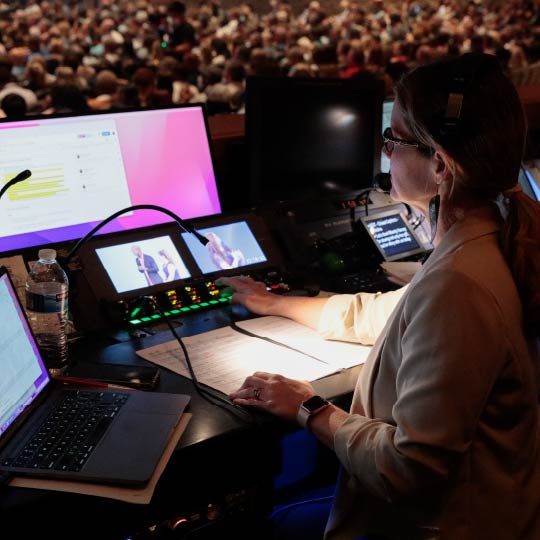
When you say “yes” to this role, you are helping translate a global message into a powerful local experience. Every detail you manage—sound, lighting, screens, slides, transitions—contributes to an atmosphere where leaders can grow.
Lesson 1:
Your Role in the Global Movement
Discover how the GLS is more than a leadership event—it’s a worldwide movement. Learn how your leadership helps create a seamless, distraction-free environment where transformation can happen.
-
Recognize your role as part of a global movement, not just a local event.
-
Understand how technical excellence supports life-changing experiences.
-
Learn practical steps to cast vision and invite your team into the mission.
Lesson 2:
Building and Leading Your Local Team
Behind every great Summit experience is a strong team. Learn how to recruit, organize, and lead volunteers in roles like sound, lighting, multimedia, and stage management. Build clarity, unity, and purpose.
- Identify key production and technical roles needed for the Summit.
- Align your team around a shared vision and clear expectations.
- Collaborate effectively with the event manager, facilitator, and worship team (if applicable).
Lesson 3:
Creating an Immersive, Excellent Experience
Your role is to make people forget they’re watching a video. Explore how sound, lighting, atmosphere, and smooth transitions create a live, immersive experience that draws leaders into the message.
-
Master sound, lighting, and screen setup to minimize distractions.
-
Design an environment that sets the tone before the first session begins.
-
Plan and rehearse seamless transitions that keep participants engaged.
Lesson 4:
Running the Program and Sharing the Impact
The big day is here. Learn how to run the program with precision, partner with your facilitator, and capture powerful stories of impact that will inspire your community and future events.
-
Organize and test all official GLS content using recommended tools.
-
Support the facilitator with flawless cues, timing, and transitions.
-
Collect testimonies and highlight moments that extend the Summit’s impact.
You’re not just running slides or testing microphones—you’re helping write stories of transformation in your city.
Next Steps
- Watch each lesson and review the lesson sheets with your team.
- Finalize your event leadership structure and assign clear roles.
- Develop your site’s program or grid along with your leadership or country team.
- Schedule rehearsals and technical checks in advance. Ensure transitions run smoothly.
- Partner with your marketing team to capture and share impact stories.
Feel free to reach out with any questions or queries by filling out the form.
Frequently Asked Questions
Do I need professional production experience to serve in this role?
Not necessarily. While experience helps, many Production Coordinators are volunteers who’ve learned on the job. What matters most is willingness to learn, attention to detail, and the ability to lead a team. Training and resources will guide you.
How big should my production team be?
Your team doesn’t need to be large—just united and skilled. Typical roles include sound, lighting, multimedia, and stage management. In a smaller venue, one person may cover multiple roles. Focus on clarity, teamwork, and preparation rather than size.
What equipment do we need to run the GLS?
You don’t need professional studio gear. A quality screen or projector, reliable audio system, computers for slides and playback, and basic lighting are usually enough. Excellence comes from testing, rehearsal, and attention to detail—not expensive tools.
Do we have to use ProPresenter?
ProPresenter is recommended because it handles video, slides, and media smoothly. But if your team is more familiar with another tool, you can use it—as long as it supports high-quality video playback, integrates with your audio system, and your operators are confident using it.
How do we make the Summit feel “live” when it’s video-based?
Through immersion. Good sound, intentional lighting, smooth transitions, and an engaged facilitator help participants forget they’re watching a video. Even simple touches like walk-in music and clean screen design make the event feel alive.
What if something goes wrong during the program?
Stay calm. Have backups ready (extra mics, slides preloaded, spare cables). Your facilitator can keep the audience engaged while you resolve issues. Rehearsals and pre-event testing minimize surprises, but flexibility and teamwork are your best tools.
How do I work with the facilitator and event manager?
Think of your role as the behind-the-scenes support system. The facilitator relies on you for timing, cues, and technology. The event manager handles logistics and flow. Regular communication before and during the event keeps everyone aligned.
Can we customize the program with live elements?
Yes. While the GLS comes with official content, you can add local creative elements—such as music, testimonies, or live speakers—at designated spots. Just ensure they align with the Summit’s spirit of excellence and don’t disrupt timing.
What do I do after the Summit ends?
After the event, delete official GLS content from your computers (to protect copyright), return borrowed equipment, and submit highlight stories and photos to the GLN team. Share testimonies locally to build momentum for the next Summit.
What’s the most important thing to remember in this role?
You are not just running tech—you are creating the conditions for transformation. Every detail, from a microphone check to a smooth transition, serves a bigger purpose: helping leaders encounter ideas that can change their lives.